Tropics Rattlez Iguana
$13.99
Posted by Britt Hildebrand & Lola Pinvin on Jun 22nd 2026
Discover how professional truffle dog trainer Lola Pinvin trains Labradors Thanos and Ash to find truffles using scent work and play—and why structured breaks are essential for success in the field.
There's a moment in the field that says everything about what it means to train a working dog well. A dog slows, nose dropping toward the earth, tail wagging purposefully. Then, a scratch. Buried just beneath the surface: a truffle.
For those who work in truffle hunting, that moment is the result of months, sometimes years, of careful, considered training.
We had the opportunity to meet Lola Pinvin, a dog trainer specializing in truffle searching who works alongside her two Labradors, Thanos and Ash to understand what it really takes to build a reliable truffle dog and why play is just as important as any other part of the process.
Q: You work with two Labs with very different personalities. Can you walk us through how you first introduced them to the truffle scent, and what the early stages of training looked like?
A: It’s a little complicated to explain every step like this, but despite the differences in personality between dogs, the very first thing I do with all of them is simply sit calmly in my living room and reward them every time they come to smell the scent I have in my hand.
What mainly changes depending on the dog’s personality is the way I approach the search work at the beginning. With some dogs, I can quickly increase the quantity of truffles, but I may have more difficulty getting them to search deeper or in harder soil. With others, it’s the opposite.
Another thing that can be complicated, and where you really need to adapt to different personalities, is working in a truffle orchard. The approach will be very different with a calm dog versus a very high-energy dog.
The first thing I can already say is that before working with your dog, it is absolutely essential that their basic needs are fully met.
I have also always used a special collar with my dogs that I only put on when we are going to work. It allows me to understand whether they are okay with working or not. For me, consent is essential in every relationship.
You really have to adapt to each dog. That’s why I sometimes use intermediate steps that I can skip depending on the individual dog.
Q: When a dog scratches to indicate a truffle, your timing in stopping the dig is critical. How do you train that precise cue, and how long did it take each dog to master it?
A: Stopping the marking by digging is actually linked to the concept of “stop,” which is a behavior I generalized to truffle work. I first obtained this behavior through capturing, when my dog naturally stopped and waited for me during walks. Through repetition, when I say “stop,” my dog stops walking: that’s the whole principle of behavior capturing.
Once this was well established during walks, I simply generalized the behavior so that I could also use it when the dog is marking truffles.
Stopping digging can be frustrating for the dog, which is why I tend to reward the moment they stop digging, and then reward once again when I have found the truffle.
Sometimes I ask my dog to mark the truffle again because I cannot find it, and if the dog does not stop, I simply move them gently aside with my hands.
In general, we talk more in terms of truffle seasons rather than years. It really depends on how frequently the dog is worked, but also on whether nature is generous or not.
I would say it takes at least two seasons for a dog to become operational and reliable.
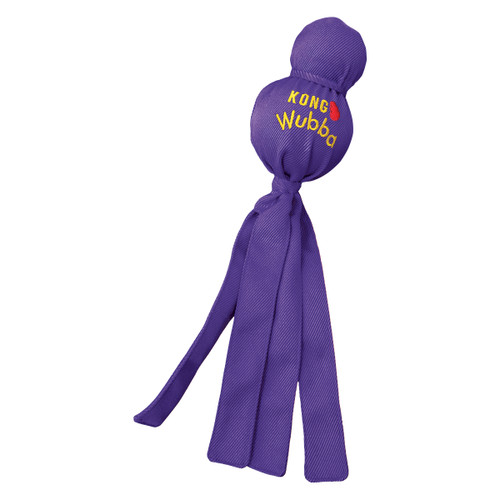
Q: You always have a Wubba with you in the field. How do you use it to structure breaks without disrupting the dogs' search drive?
A: Breaks are structured with a clear start and end cue. It’s similar to the way a dog understands that a walk is about to begin when we say, “We’re going for a walk,” and knows it’s over when we say, “Come on, let’s go home.”
My breaks work exactly the same way. When I send my dog to the fields, I say “we’re working,” and when it’s time for a break, I say, “We’re on a break.” Then, when the break is over, I say, “Okay, it’s finished, we’re working.”
This helps me structure both work time and rest time, while keeping the dog involved and always ensuring that I’m respecting their consent. My breaks are structured in a way that starts with play to help the dog release energy and unwind, followed by a calm and relaxing moment before returning to work.
It’s also why I alternate between my two dogs: if one of them doesn’t feel like working, that’s completely okay.
Q: The Wubba attached to your truffle bag is part of your work routine. How intentional was that association, and do you use KONG toys differently for Thanos versus Ash?
A: The Wubba is part of my work routine, especially in large search areas.
With Thanos, who is the calmer one, I mainly use the Wubba as a fetch toy or drag it along the ground to play. With Ash, the younger and more excitable one, I use it as an interactive tug toy. That’s why I really like this toy: it can be used in many different ways to adapt to what the dog needs or enjoys.
Q: For someone just starting out with a truffle dog, what are the most commonly missed signs that a dog is hitting their limit, and how do play breaks help reset them?
A: First of all, I would say that before starting with a truffle dog, if the goal is to get into truffle cultivation, it is really important to get proper training in this field, as truffles are still quite mysterious.
And if the goal is truffle hunting in nature, it is essential to be aware of the current legal framework in order to stay within the law. In France, truffle harvesting is regulated and depends on the type of land. On private land, it requires the owner’s permission. In public forests, it is generally prohibited without the right or authorization from the relevant public forest authorities or land managers, and it may also be subject to local regulations.
Then, regarding the signs that a dog is starting to get tired, I would say it depends on the individual: some dogs slow down, others simply change behavior, and some even start to have slightly red eyes when fatigue sets in.
In the case of my dogs, they either stop completely or pick up a stick to show me that they want to take a break.
Scent work requires a very high level of mental engagement from the dog. Even though, from the outside, it may look like the dog is simply sniffing, they are actually using complex abilities: concentration, odor analysis, memory, decision-making, and emotional regulation. This is why breaks have such a direct impact on performance.
When a dog performs several searches in a row without a break, mental fatigue gradually builds up. This fatigue is not always physically visible, but it appears in the quality of the work: the dog becomes less precise, may start searching faster instead of more accurately, give approximate indications, or become more influenced by the handler. On the other hand, a break allows the brain to process the information gathered during the previous search. In a way, the dog “digests” the experience, which improves understanding and precision afterward.
Breaks also play an important role in emotional regulation. Between searches, a short play session can help the dog release pressure, let go of tension, and mentally disconnect from the exercise. Playing briefly with a ball or a tug toy, for example, often helps the dog release energy and return more mentally available afterward. After this more dynamic moment, a quieter recovery period allows the level of excitement to gradually decrease before going back to work.
These breaks also help prevent the development of mistakes. As mental fatigue increases, some dogs begin guessing, marking randomly, or losing independence. Continuing to work in this state can reinforce unwanted habits. The break then acts as a reset: the dog returns more focused, cleaner in their work, and often more motivated.
Finally, breaks help maintain the dog’s enjoyment of searching. Sessions that are too long can create frustration or mental overload, whereas structured work with pauses usually keeps the dog engaged and willing to work. Many handlers notice that after a break combining release, play, and recovery, their dog returns to the search area with better focus, clearer indications, and fewer false positives.
In scent work, performance does not depend only on the amount of time spent working, but also on the quality of recovery between searches.
Discover more about the world of truffle dogs and follow the journey of Thanos and Ash on Instagram at @la_truffe_du_retriever.
A dog's nose contains up to 200 million olfactory receptors, compared to roughly 5 million in humans. It's that extraordinary biological capability that makes truffle hunting possible. It takes the right training, the right tools, and a trainer who understands that rest and play aren’t a break from the work; they’re part of it.
Photo credit: Meï Speybrouck Photographie
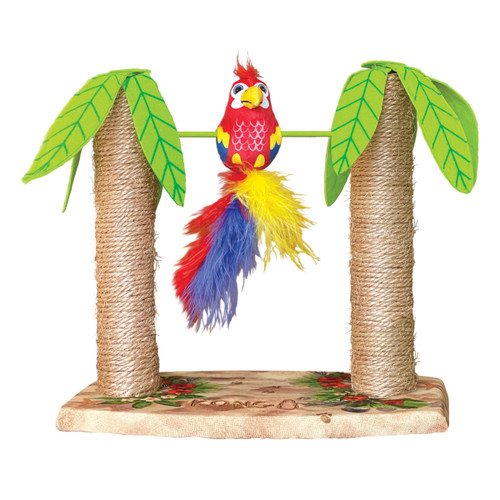
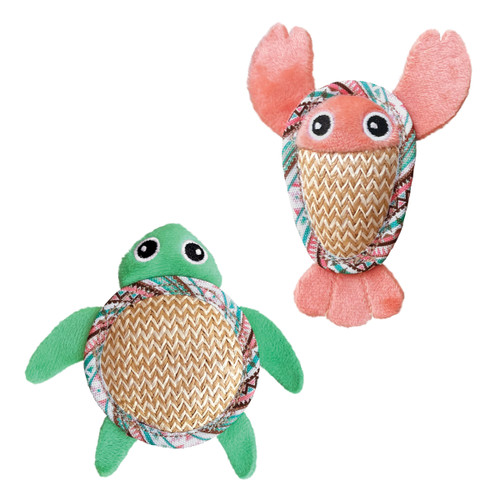
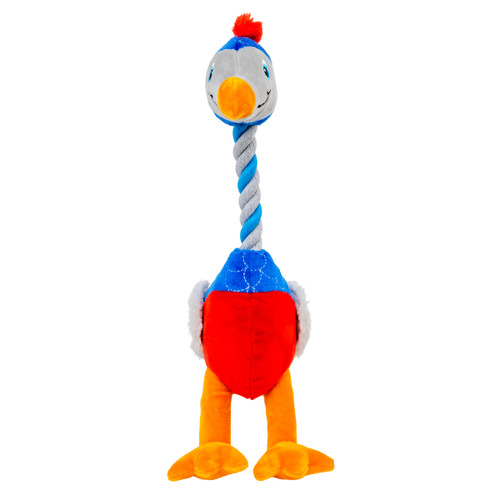
This summer, your furry friend deserves a little paradise too. Shop the new tropical toys, and bring the vacation home to them.
Shop Now